

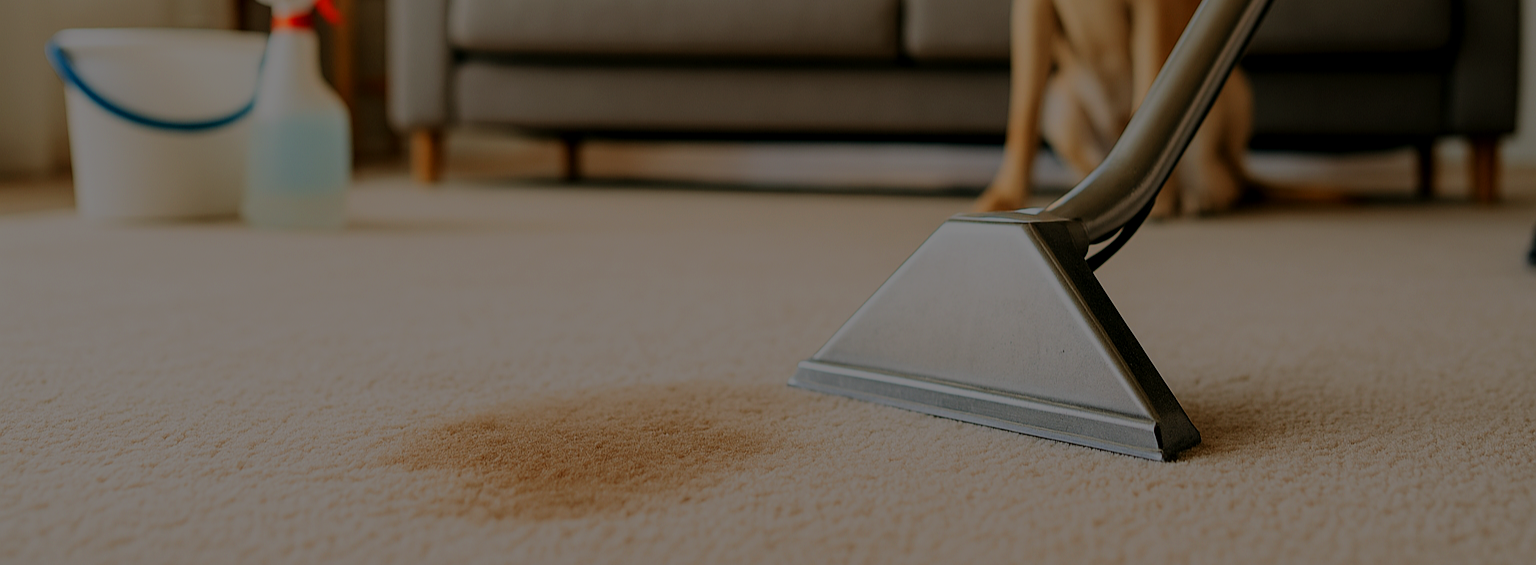
Pet Urine & Stain Removal in Bell County, TX
Stop the smell, save your carpet. Deep treatments for pet accidents and tough stains in Belton, Temple, and Killeen.
Pet accidents do more than leave a yellow spot—they soak into the pad and linger in the air. Rapid Dry uses professional urine treatments, deep flushing, and sub-surface extraction to neutralize odor at the source, not just cover it up. We don’t cut corners, we clean them.
Serving
Belton • Temple • Killeen
Surrounding Bell County
Pet Odor, Urine, and Spot Removal
We target the “problem areas” in your carpet—repeat pet accidents, lingering odors, and stubborn spots you’re tired of hiding in your Belton, Temple, Killeen, and surrounding Bell County home. Using professional urine treatment, sub-surface extraction, and specialty spot and stain removal, Rapid Dry helps Central Texas homeowners save carpet when possible and gives straightforward advice when replacement is the better long-term fix.
Pet Urine & Odor
UV/black light inspection to find hidden urine
Targeted urine decontamination products
Sub-surface extraction for carpet, backing, and pad
Spots & Stains
Coffee, tea, juice, and food spills
Grease, makeup, ink, and traffic lanes
Honest expectations for permanent stains
Who This Is For
Homes with dogs or cats having repeat accidents
Renters getting ready for move-out inspections
Homeowners tired of “mystery odors” in certain rooms
Why Pet Urine Is Hard to Treat
(and Why the Smell Keeps Coming Back)
Pet urine doesn’t just sit on top of the carpet. It soaks through the fibers, into the backing, and often into the pad and subfloor. As it dries, urine crystals form and lock in odor. Every time the room gets humid or warm, those crystals reactivate and the smell returns—no matter how many times you spray it with store-bought cleaner.
Household products can also leave sticky residues that attract soil, create yellowing, or even set the stain permanently. That’s why some spots look worse after a few DIY attempts.
Rapid Dry uses professional urine decontamination products, controlled flushing, and sub-surface extraction to break down urine salts and pull them out of the carpet system—not just mask the problem for a day or two.
Common DIY Mistakes That Make Pet Odor Worse
When a pet accident happens, most people do whatever they can with what’s in the cabinet. Unfortunately, some “quick fixes” actually make professional odor removal harder:
Using too much store-bought cleaner – overwets the pad and leaves sticky residue that attracts more soil.
Scrubbing the fibers – can distort the carpet pile and spread the contamination.
Covering it with powders or baking soda – abrasive particles can work down into the backing and are very hard to fully vacuum out.
Masking with heavy perfumes or sprays – hides the smell for a day or two, but doesn’t touch the urine salts in the pad.
Rapid Dry focuses on flushing and extracting the contamination instead of just covering it up, so the odor is actually reduced at the source.
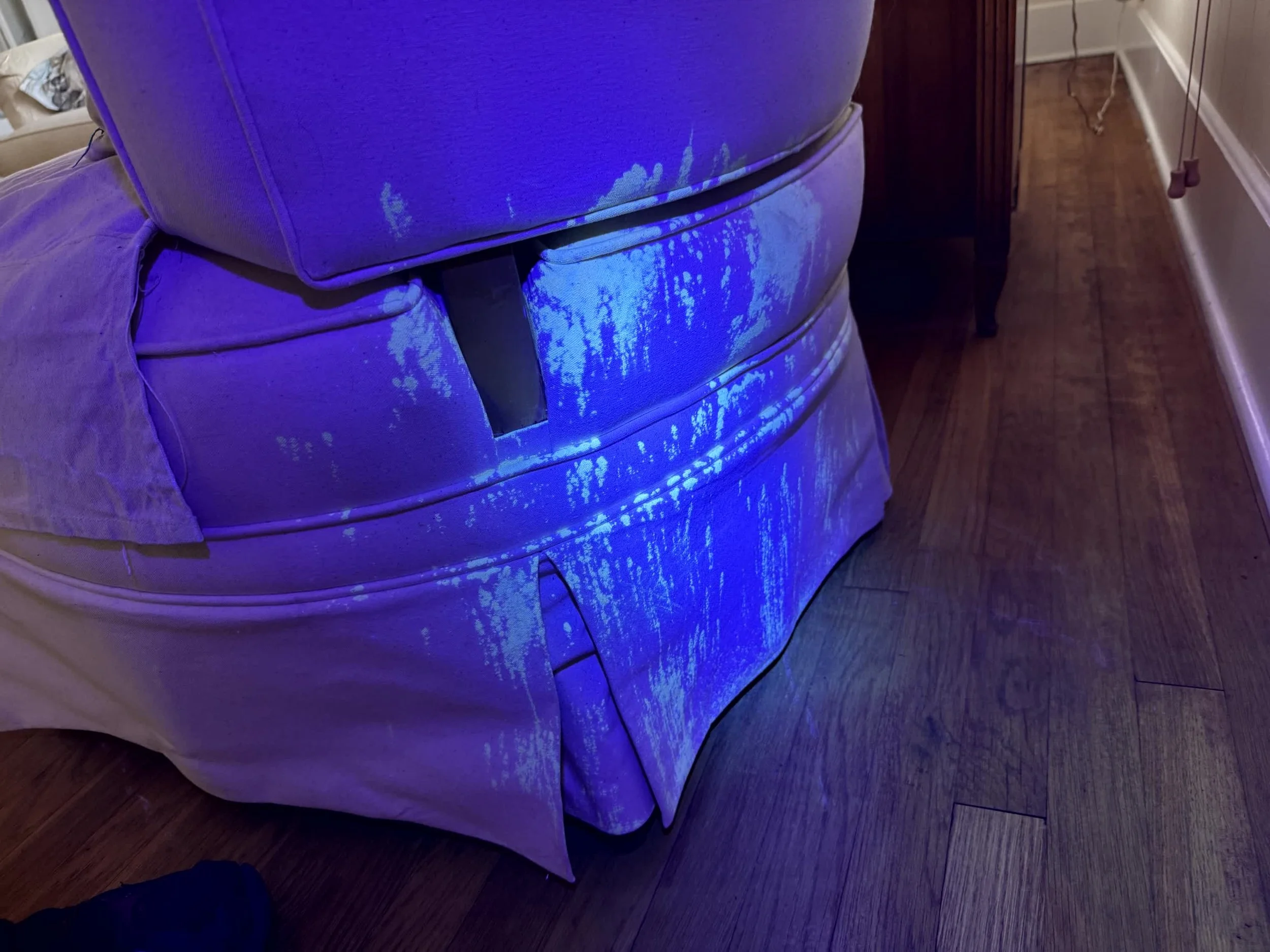
Why does Urine come back?
Urine soaks into carpet backing, pad, and sometimes subfloor
As it dries, urine salts and crystals lock in odor
Humidity and heat reactivate the smell over and over
Store cleaners can set stains and leave residue
Professional treatment targets the source, not just the surface
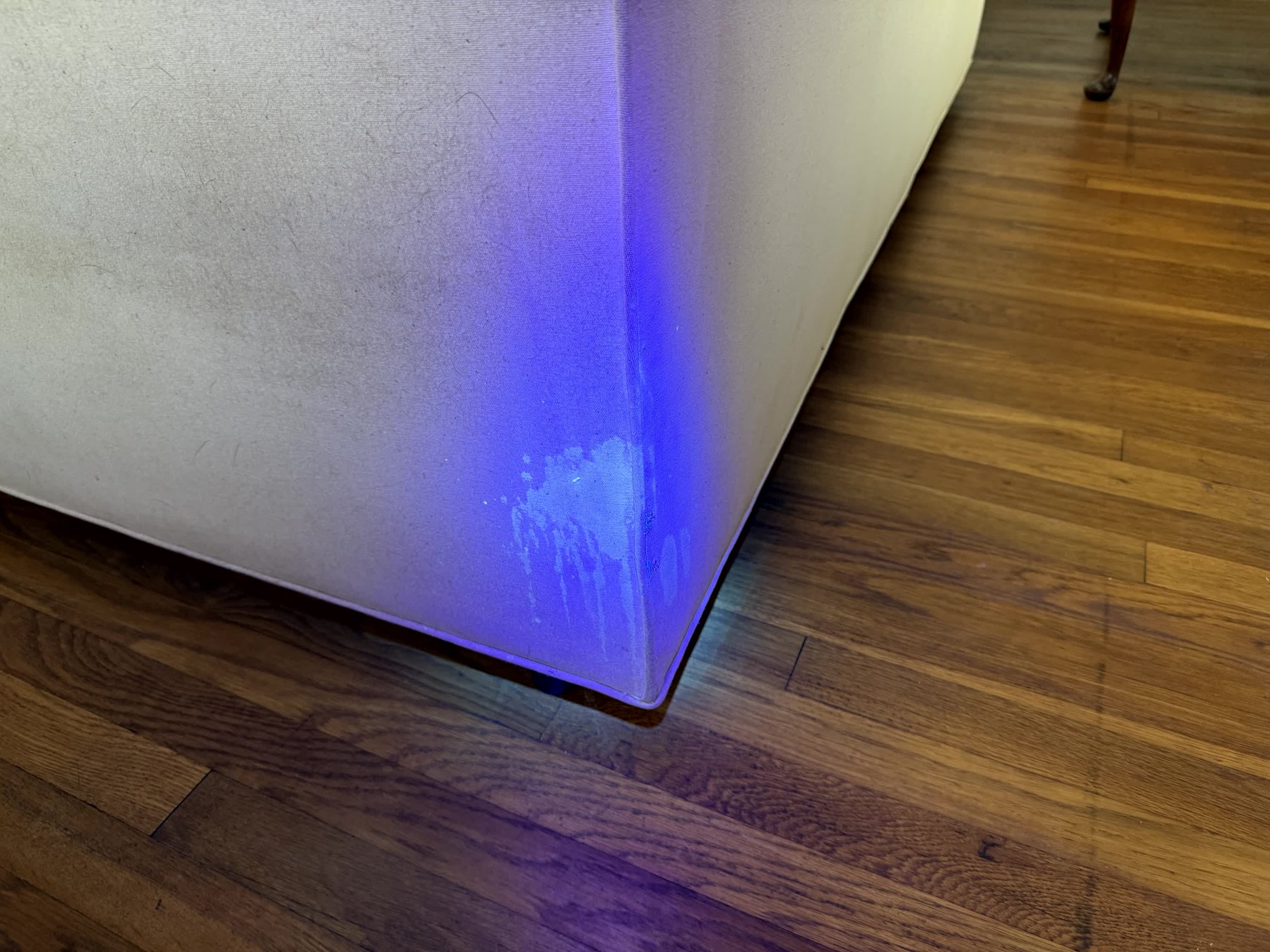
Our UV light inspection shows exactly where pet urine has soaked into the carpet or furniture, so we know which areas need deep treatment and sub-surface extraction—not just deodorizer.
How Our Pet Urine & Odor Removal Process Works
When you call Rapid Dry for pet urine and odor issues, we’re not just “cleaning the carpet.” We’re tracking down where the contamination really is, treating it correctly, and extracting as much of it as possible from the carpet, pad, and backing.
Step 1 – Inspect & Locate the Urine
We start by identifying exactly where the problem is, not just where you can see a stain.
UV/black light to highlight hidden urine spots
Moisture detection where needed to see how deep it went
Nose/odor check to confirm the worst areas
This tells us which areas need full treatment and which just need standard cleaning.
Step 3 – Deep Flush & Sub-Surface Extraction
In affected areas, we don’t just mist and move on—we flush and extract.
Controlled rinsing to loosen and suspend contamination
Sub-surface extraction tools pull solution up from the carpet and pad
Truckmount-powered vacuum helps remove as much as possible from the carpet system
This step is what most DIY products and basic cleanings simply can’t do.
Step 2 – Apply Professional Urine Treatment
Next, we apply professional urine decontamination products designed to break down urine salts and crystals.
Targets the odor-causing residues, not just the surface stain
Helps release contamination from the backing and pad
Safe for use on residential carpet when used as directed
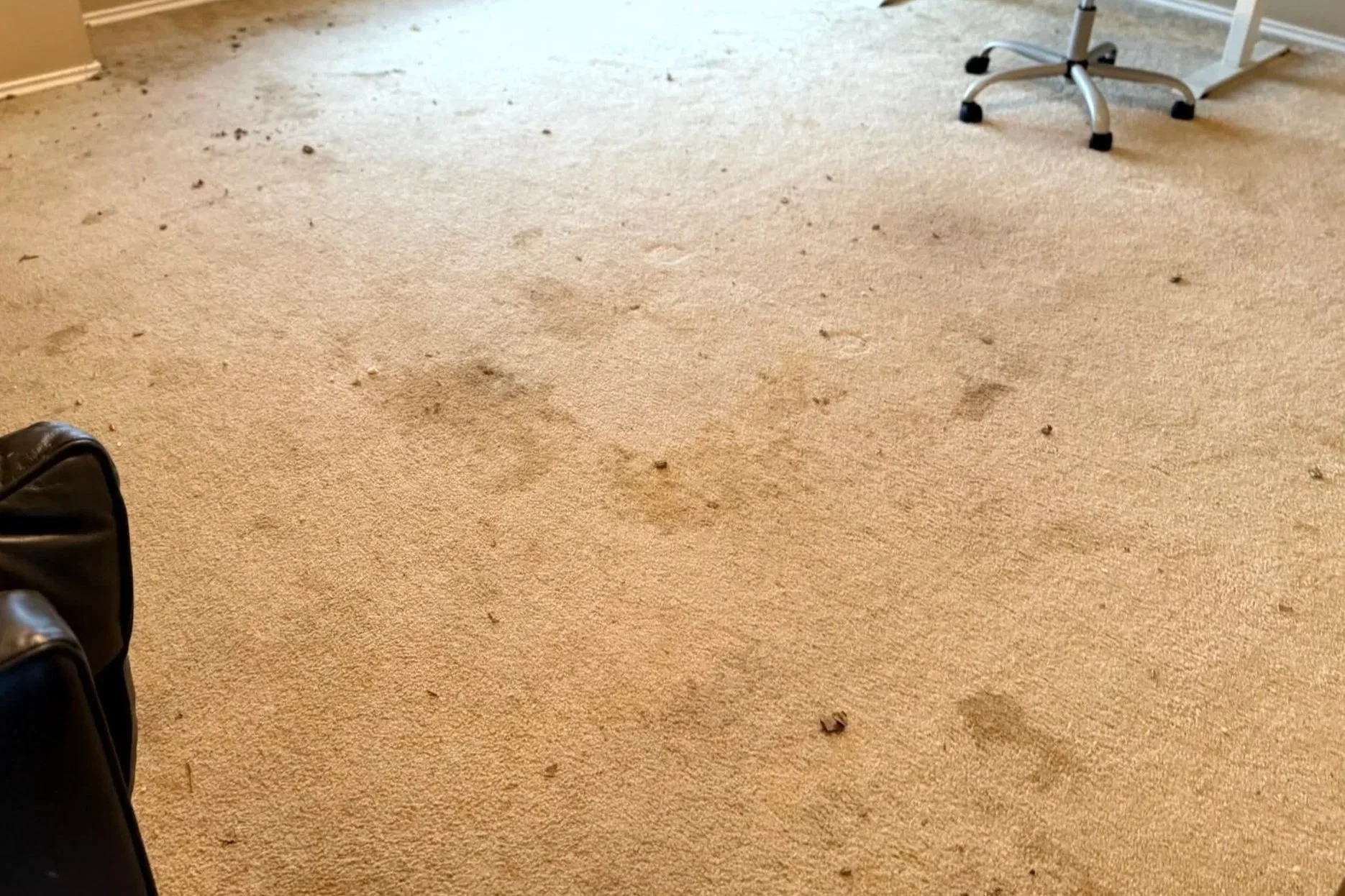
After applying an enzyme and allowing to sit, see how sub-surface extraction helps remove deep pet urine and odor from your carpet and pad
Step 4 – Rinse, Clean, and Neutralize
Once the heavy contamination is treated and extracted:
We rinse the area with hot water extraction to remove residues
Neutralize remaining treatment products
Groom the carpet fibers for an even finish and better dry time
You’re left with carpet that’s clean, fresh, and ready to dry properly.
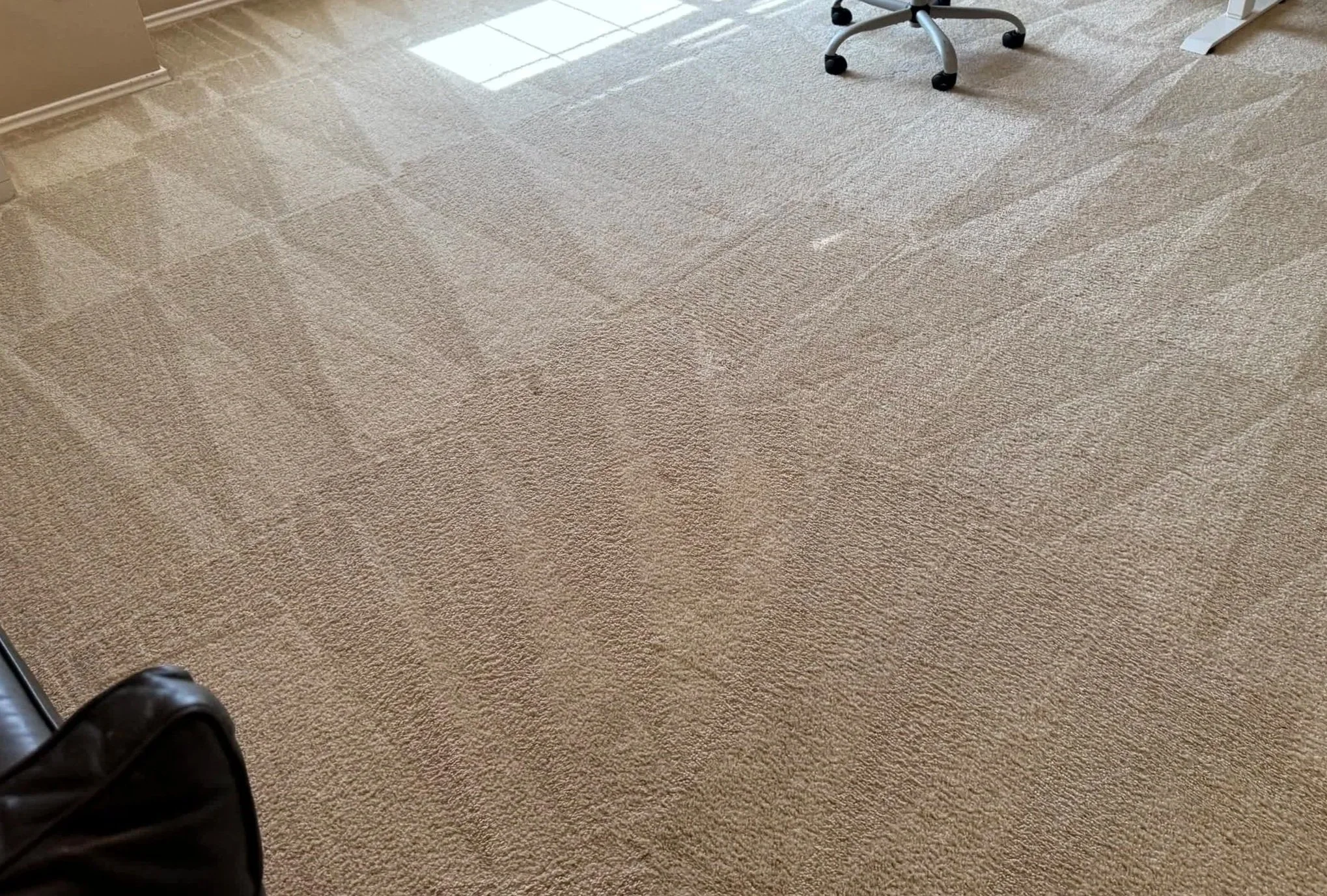
Step 5 – Honest Talk About Severe Damage
Some severe cases can’t be fully corrected with cleaning alone—especially if:
Pets have repeatedly used the same spot for months or years
The pad and subfloor are heavily saturated
Odor has spread beyond the visible stain
In those situations, we’ll clearly explain your options, which may include:
Pulling carpet and replacing the pad
Treating or sealing the subfloor
Reinstalling and cleaning the carpet afterward
We’ll never promise “magic” results where replacement is the better long-term fix—but we’ll help you decide what makes sense for your home and budget.
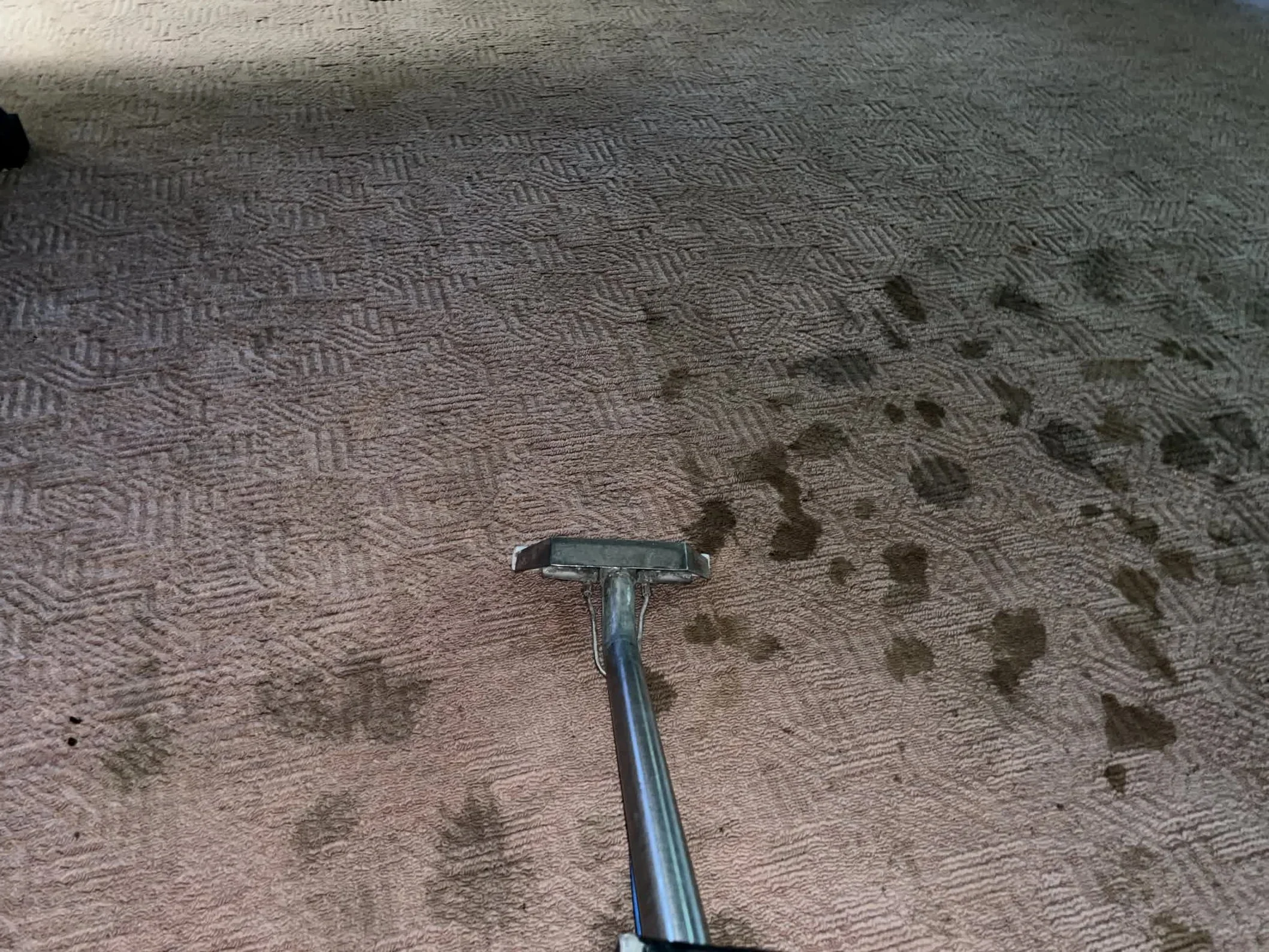
Even when we can remove heavy staining from the surface fibers, pet urine may still be trapped in the carpet pad or subfloor underneath.
Cleaning can greatly improve appearance and reduce odor, but in severe cases some smell may remain unless the pad is replaced and the subfloor is treated or sealed.
Specialty Spot & Stain Removal
Not all spots are created equal. Drink spills, tracked-in grease, rust, ink, and pet accidents all behave differently in carpet. Some sit on the surface, while others chemically bond to the fiber.
Rapid Dry uses professional spotting tools and chemistry to treat each type the right way—without flooding the carpet or causing damage.
What We Can’t Honestly Promise
Some stains are permanent, especially if:
The carpet dye itself has been damaged or bleached
Strong products or home remedies were already used
The spill has been sitting for months or years
In those cases, we’ll do everything we can—but we’ll also be upfront about what’s realistic so you know what to expect before we start.
Add-On to Your Cleaning
Specialty spotting is available as an add-on to your carpet cleaning or pet urine treatment visit.
During your walkthrough, we’ll point out problem areas and let you know which spots are good candidates for advanced stain removal and which might have permanent damage.
What We Can Help With
Food and drink spills (coffee, tea, juice, soda)
Pet accidents and yellowing
Gun, Grease and oil spots
Mud and traffic lane buildup
Makeup, ink, and small dye spots
Rust and some filtration lines (dark edges along baseboards)
Each spot is tested first so we can choose the safest, most effective approach for that fiber and dye.
Spot vs. Stain – What’s the Difference?
A spot is usually something that’s on the carpet fiber—like spilled coffee, mud, or grease. With the right chemistry and technique, many spots can be loosened and removed because the foreign material hasn’t permanently altered the carpet.
A stain is damage that’s in the fiber. The spill has bonded with or changed the dye itself (like bleach marks, hair dye, or long-set urine). Stains may lighten or improve, but they can’t always be fully removed.
During your walkthrough, we’ll point out which areas are likely spots (good candidates for removal) and which are true stains, so you know what to realistically expect before we start.
Important: The wrong DIY spot cleaners can sometimes turn a removable spot into a permanent stain by setting the spill or damaging the carpet dye. If you’re not sure what to use, it’s usually safer to blot and call a professional.
Examples of Spots (on the fiber – often removable):
Fresh coffee or tea spill
Mud tracked in from outside
Grease or oil drips from the kitchen
Soda or juice spill
Food spots (sauces, chocolate, ketchup)
Pet vomit that was cleaned up quickly
Recent makeup or lotion smear
Examples of Stains (in the fiber – may be permanent):
Bleach marks or color loss
Hair dye or clothing dye transfer
Old pet urine that has sat for months
Rust that’s soaked in for a long time
Long-standing wine stains that were never treated
Furniture stain/wood stain transfer from wet legs
Sun fading or discoloration from UV exposure
Pricing &
What to Expect
Every pet accident is a little different, so we price based on how deep the contamination goes and how many areas need treatment. Our goal is to be upfront and fair, not surprise you once we arrive.
How Pet Urine & Odor Pricing Works
Standard Pet Treatment Add-On - $25
Light to moderate accidents treated during a regular carpet cleaning visit.
Great for: a few problem spots, newer accidents, and mild odor in one or two rooms.
Severe Contamination Treatment - $25 - $75
For repeated accidents in the same areas, strong odor, or visible staining over a wide area.
May include: heavy flushing, sub-surface extraction, and focused odor control.
Restoration-Level Solutions - $125+
In extreme cases, full odor correction may require:Pulling carpet and replacing pad
Treating or sealing subfloor
Reinstallation and final cleaning
We’ll walk you through which level your situation fits before any work begins.
What You Can Expect From Us
Clear explanation of what we can and can’t fix
Honest expectations about odor improvement vs. full removal
No pressure to choose replacement if cleaning is still a good option - we prefer to RESTORE vs replace.
Professional, truckmount-powered equipment and industry-standard chemistry
If you send us a few photos and a description of the problem areas, we can usually give you a ballpark range before we come out.
FAQ – Pet Urine, Odor & Spot Removal
-
A: In many light to moderate cases, we can greatly reduce or remove the odor. In severe or long-term contamination, odor can remain in the pad or subfloor, and full correction may require pad replacement and subfloor treatment. We’ll always tell you what’s realistic before we start.
-
A: Standard carpet cleaning is great for soil and everyday spills, but it usually doesn’t reach urine that’s soaked into the pad and backing. That’s why we use targeted urine treatments and sub-surface extraction when needed, instead of just “cleaning over” the problem.
-
A: Yes. We use professional products designed for residential use and follow manufacturer guidelines. We may recommend keeping kids and pets off the treated areas until everything is dry and the cleaning is complete.
-
A: Strong odor that comes back after cleaning, repeated accidents in the same area, or visible heavy staining over a large area are signs the pad may be contaminated. During our inspection, we’ll check these areas and let you know if cleaning is enough or if pad replacement is the better option.
-
A: We can’t honestly promise that. Many spots (on the fiber) respond well to professional cleaning, but true stains (in the fiber) may be permanent. We’ll test problem areas and explain what’s likely to come out and what may only improve or remain visible.
-
A: Often, yes—especially if previous cleanings only treated the surface. Our focus is on urine decontamination and sub-surface extraction. We’ll inspect the area and let you know if further cleaning is a good option or if structural work (pad/subfloor) is needed.
-
A: Blot up as much as you can with clean, dry towels—press down firmly, don’t scrub. Avoid using strong household chemicals, colored cleaners, or powders, as they can set the stain or cause damage. Then call us and let us handle the deep treatment.
-
A: Most pet treatment and cleaning jobs dry within several hours, depending on how heavily the area had to be flushed and your home’s temperature and airflow. We’ll give you drying tips and let you know which areas were treated more aggressively.
Areas We Proudly Serve – Carpet Cleaning Services
At Rapid Dry, we proudly offer expert carpet cleaning services throughout Bell County and surrounding communities, including:
Belton, TX (our home turf!)
Harker Heights, TX
Nolanville, TX
Morgan’s Point Resort, TX
Fort Hood(formerly Fort Cavazos), TX
Little River-Academy, TX
Rogers, TX
Whether you’re dealing with dirty traffic lanes, pet odors, or need a deep clean after a tenant move-out, Rapid Dry is your trusted local expert for professional, fast-drying carpet cleaning.
